Romeo & Juliet
In the fair city of Verona, where we lay our scene, two households, both alike in dignity, held an ancient grudge that would stain the hands of the next generation with blood. The Montagues and the Capulets were sworn enemies, their feud bubbling over into street brawls and bitter words. Yet, from the fatal loins of these two foes, a pair of star-crossed lovers would take their life. This was not merely a story of youthful rebellion, but a collision of ancient hatred and a love so pure it could only exist briefly in the cracks of a crumbling society. The cobblestone streets of Verona were often slicked with the sweat of tension and the blood of honor, as servants and nobles alike took up arms at the mere mention of a rival name. In this atmosphere of relentless hostility, any flower of peace seemed destined to be crushed before it could bloom.
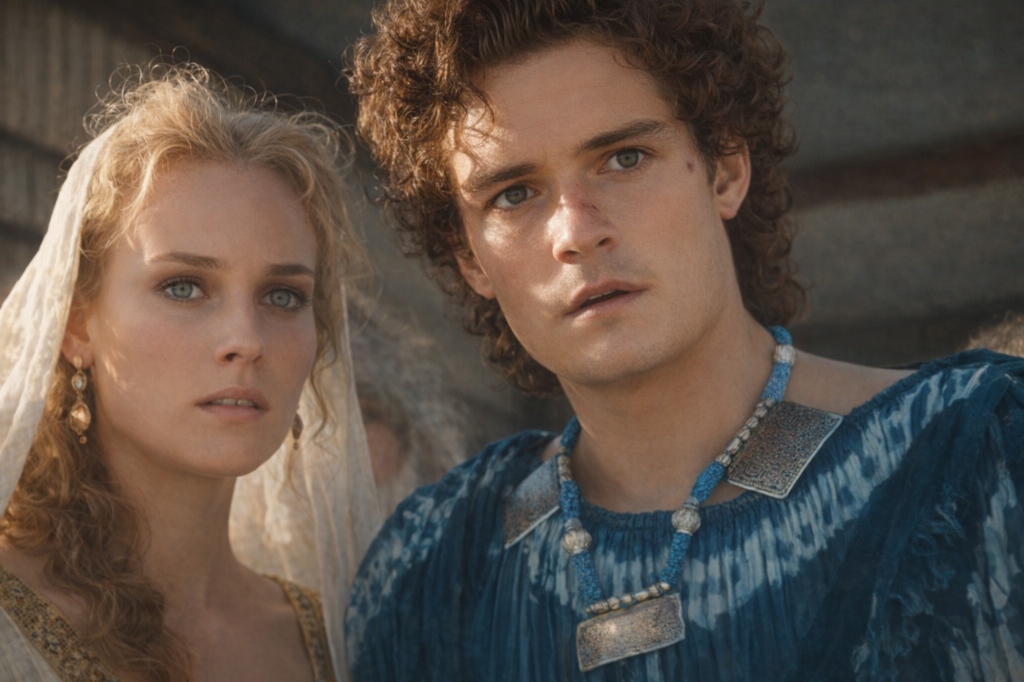
Romeo, the son of Lord Montague, was a young man inclined to melancholy and poetic musings on love. He wandered the sycamore groves at dawn, his heart heavy with a superficial passion for the fair Rosaline, who did not return his affections. His friends, Benvolio and the mercurial Mercutio, mocked his gloom, urging him to feast his eyes on other beauties. Fate, playing its intricate hand, led him to a masked ball at the Capulet mansion. Romeo wore a mask not just to hide his identity as a Montague, but perhaps to hide a soul that felt out of place in a world of war. It was there, amidst the swirling dancers, the flicker of a thousand candles, and the intoxicating scent of jasmine, that he first saw Juliet. She was the daughter of Lord Capulet, a girl of barely fourteen, yet possessing a spirit and wisdom that seemed to echo through the ages. For Romeo, it was instant, blinding love. The moment their eyes met, the rest of the world—the feuds, the masks, the ancient grudges—faded into a distant, irrelevant hum.
"Did my heart love till now? Forswear it, sight! For I ne'er saw true beauty till this night," he whispered to the air, his voice trembling with a realization that changed his very essence. Emboldened by a passion that felt like a divine command, he approached her. Their first meeting was no common greeting; it was a sacred dance of words, a sonnet built in real-time between two souls who had found their missing halves. He spoke of pilgrims and shrines, she of palms and prayers, their hands meeting in a "holy palmer’s kiss." The kiss that followed was a seal upon a destiny neither could yet comprehend. But the sweet realization of love was quickly soured by the bitter revelation of their identities. "My only love sprung from my only hate!" Juliet cried in the privacy of her heart upon learning he was a Montague. "Too early seen unknown, and known too late!"
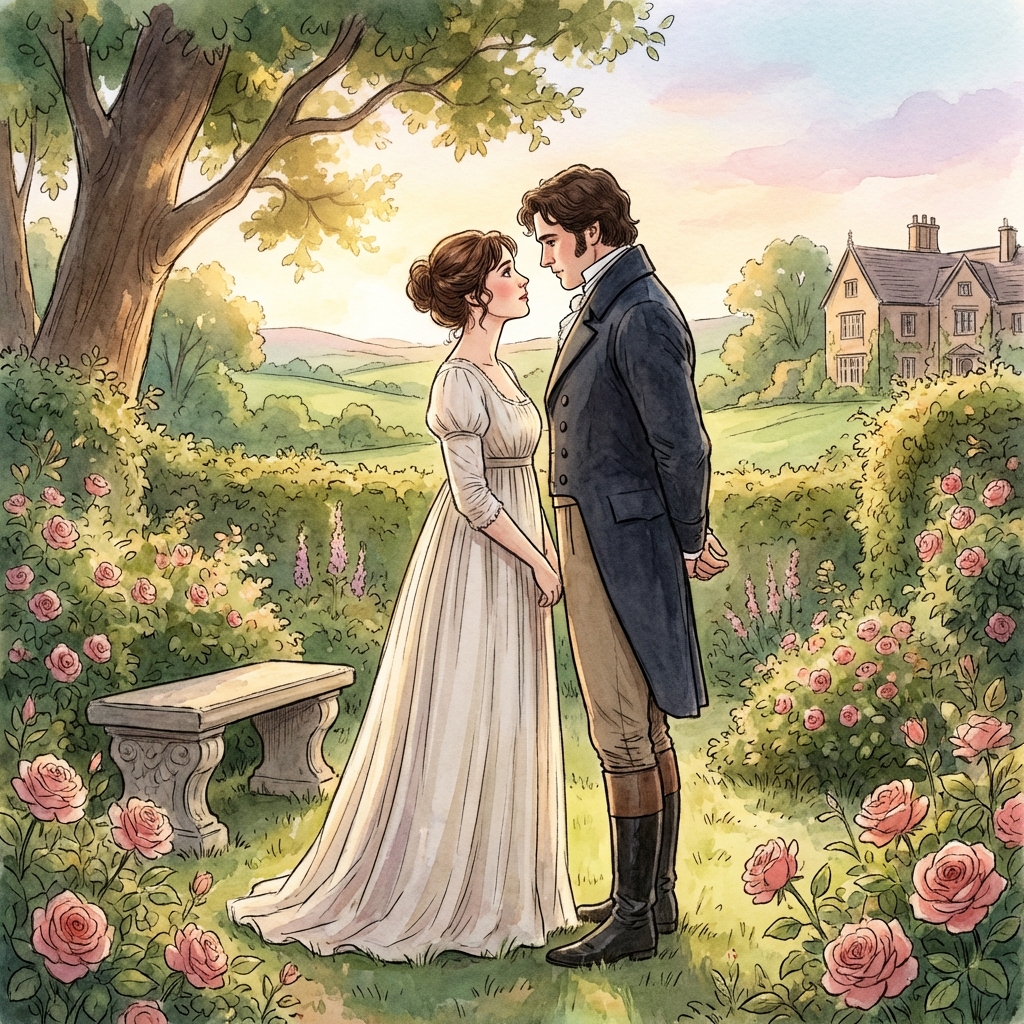
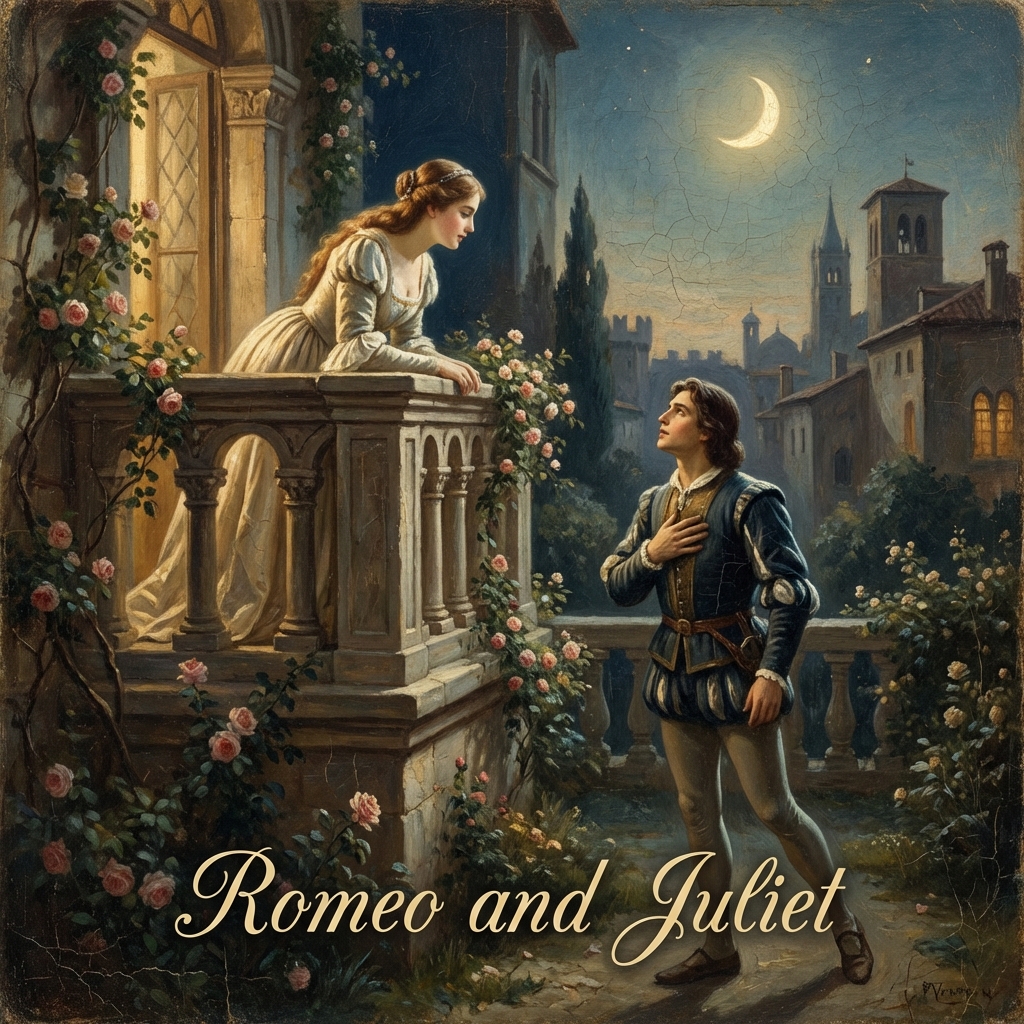
That night, unable to leave the gravity of her presence, Romeo abandoned his friends and climbed the high stone walls of the Capulet orchard. He stood beneath Juliet's balcony, hidden by the shadows of the fruit trees, watching the light from her window as if it were the sun itself. In the silence of the night, he heard her confess her love to the stars, unaware of his presence. "O Romeo, Romeo! Wherefore art thou Romeo? Deny thy father and refuse thy name; Or, if thou wilt not, be but sworn my love, and I'll no longer be a Capulet." Her words were a Clarion call to his soul. He revealed himself, and under the silver light of the moon, which he swore by and she cautioned against for its inconstancy, they exchanged vows of eternal devotion. The world outside might be tearing itself apart, but in that garden, there was only the scent of roses and the promise of a future they would seize with both hands.
Friar Laurence, a holy man who spent his days tending to both the spirits of Men and the medicinal herbs of the earth, agreed to marry them in secret. He looked upon the young lovers with a mixture of hope and trepidation, praying that this union might be the catalyst to turn their households' ancient rancor into pure love. "Wisely and slow; they stumble that run fast," he cautioned, even as he prepared the ceremony. The next day, in the quiet, shadowed sanctuary of his cell, Romeo and Juliet were wed. It was a moment of profound stillness, a bridge built over a chasm of hate, bound together by a love that defied their names, their history, and the very laws of Verona. For a few short hours, they belonged only to each other, and the world was right.
But tragedy is swift and relentless in Verona. Just hours after their secret wedding, the heat of the afternoon sun seemed to set the city's temper on fire. Romeo encountered Juliet's cousin, Tybalt, a man whose pride was as sharp as his blade. Tybalt, furious at Romeo's "insult" of attending the Capulet ball, challenged him to a duel. Romeo, now bound by marriage to Tybalt's own blood, refused to fight, offering words of peace that were mistaken for cowardice. Mercutio, unable to stand what he saw as "vile, dishonorable, vile submission," drew his sword in Romeo's stead. In the chaotic struggle that followed, as Romeo tried to part them, Tybalt struck a fatal blow to Mercutio under Romeo's arm. As his friend lay dying, Romeo's peace turned to a dark, consuming rage. "This day's black fate on more days doth depend; This but begins the woe others must end." He pursued Tybalt and, in a flash of steel and desperation, killed him.
The Prince of Verona, weary of the constant bloodshed, pronounced a sentence of banishment. For Romeo, this was worse than death. "There is no world without Verona walls," he lamented to the Friar, "but purgatory, torture, hell itself." Thanks to the Friar's intervention and the Nurse's coordination, Romeo was able to spend one last, bittersweet night with Juliet. They shared a secret bridal chamber as the nightingales sang, clutching each other as if they could stop the dawn from breaking. But the sun rose, and with it, the reality of exile. Romeo fled to Mantua, leaving his heart behind in a city that had turned its back on him.
Juliet was left to navigate a new storm: her father, unaware of her marriage, had arranged for her to marry the County Paris in a matter of days. Her pleas for mercy fell on deaf ears, and her Nurse, once her confidante, urged her to betray Romeo and marry the Count. Alone and desperate, Juliet sought the help of Friar Laurence once more. He devised a plan of terrifying complexity. He gave her a distilled liquor that would induce a death-like sleep for forty-two hours. Her family would discover her "dead," place her in the ancient Capulet crypt, and the Friar would send a messenger to Romeo. Romeo would then come under the cover of night, wait for her to awaken, and carry her away to a new life in Mantua.
Juliet, driven by a love that had become her entire existence, summoned the courage to drink the vile. "Romeo, Romeo, Romeo! Here’s drink—I drink to thee." The next morning, the joyous preparation for a wedding turned into the mournful dirge of a funeral. Juliet was laid to rest in the cold, sepulchral gloom of the Capulet tomb, surrounded by the shrouded remains of her ancestors, including the freshly entombed Tybalt. She lay in a state of suspended animation, a heartbeat away from a future that was already beginning to slip through the Friar's fingers.
Fate, however, had one final, cruel trick to play. The Friar's messenger was detained by a plague outbreak, and the letter explaining the plan never reached Mantua. Instead, Balthasar, Romeo's loyal servant, arrived with news of Juliet's burial. Romeo's world shattered in an instant. "Then I defy you, stars!" he shouted into the void. He sought out a desperate apothecary, purchased a deadly poison, and rode like the wind back to Verona. He arrived at the tomb in the dead of night, his soul already half-resigned to the grave. At the entrance, he encountered the mourning Count Paris. They fought in the darkness, and Paris fell, his last request to be laid near the woman he also thought he loved. Romeo, now a ghost in his own life, broke into the crypt to find his bride.
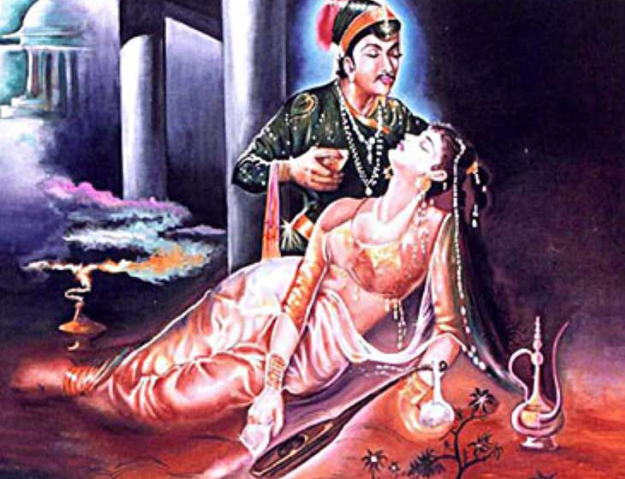
She lay there, her skin still pale but her beauty undimmed, "death’s pale flag" not yet advanced upon her cheeks. Romeo knelt by her side, overwhelmed by the sight of her. "Eyes, look your last! Arms, take your last embrace! And, lips, O you the doors of breath, seal with a righteous kiss a dateless bargain to engrossing death!" He drank the poison—quick and final—and died with his hand in hers, his last breath a kiss upon her cold lips. Only moments later, the Friar arrived, his lantern flickering against the shadows of the dead. He found Romeo and Paris cooling in their own blood just as Juliet began to stir from her long sleep.
She awoke to the horrific sight of her husband dead beside her and the Friar urging her to flee to a nunnery as the watch approached. But Juliet could not leave the man who was her world. When the Friar, frightened by the sounds of the townspeople, fled the tomb, Juliet remained. She saw the cup of poison and the dagger at Romeo's side. Finding no poison left to join him, she took his blade. "O happy dagger! This is thy sheath; there rust, and let me die." She plunged it into her breast and fell across Romeo’s body, their blood finally mingling in the dust of the tomb.
The tragedy brought the entire city to the crypt. The Prince, the Montagues, and the Capulets stood before the carnage, forced to confront the ultimate price of their senseless feud. Lord Montague revealed that his wife had died of grief for Romeo's exile, while Lord Capulet reached out a hand to his enemy. "O brother Montague, give me thy hand." In their shared sorrow, they vowed to end their hatred and honor the lovers with statues of pure gold. But the air of Verona remained heavy with the weight of what had been lost. As the Prince concluded, "A glooming peace this morning with it brings; The sun for sorrow will not show his head... For never was a story of more woe, than this of Juliet and her Romeo." Their love, born in a garden of hate, had finally brought peace to Verona, but it was a peace bought with the souls of the innocent.